Top 10: Reverse Logistics Providers
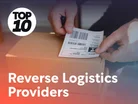
Reverse logistics involves the movement of goods from their final destination, back to the seller or to a designated location. This is often for returns, repairs, resale or responsible recycling.
An efficient reverse logistics network can be help optimise operations and boost customer satisfaction – if a consumer knows they have an accessible return option, they can buy online with confidence.
Though an important step, it can be expensive and confusing. As a result, logistics companies have formed a range of solutions to make the process as seamless as possible, handling the technical work to help businesses focus on customer satisfaction and cost savings.
Today, Supply Chain Digital takes a look at the Top 10 reverse logistics companies.
10. GEODIS
Revenue: €10.6bn (US$12.4bn)
Employees: ~49,000
CEO: Marie-Christine Lombard
Founded: 1904

GEODIS utilises its international network and strong returns model in order to protect company profits and consumer experiences. It offers collection at customer site in order to make it easier for them, as well as sorting, grading, refurbishment and repair management.
From receipt of the package to shipping, GEODIS offers real-time visibility, putting customer and shoppers alike at ease. It also makes use of analytics in order to optimise product recovery and reduce landfill waste.
9. DSV
Revenue: DKK 167.1bn (US$24.23bn)
Employees: ~160,000
CEO: Jens H. Lund
Founded: 1976
DSV is a member of the the Reverse Logistics Association and the Conseil Européen de Remanufacture. The company works to contribute towards a circular economy, utilising its extensive logistics network to help businesses comply with sustainability requirements.
It utilises a reverse logistics network in order to prolong product lifetime or transform waste through repair, refurbishment, remanufacturing, recycling or reselling.
8. Kuehne+Nagel
Revenue: CHF 27.4bn (US$28.2bn)
Employees: 80,000+
CEO: Stefan Paul
Founded: 1890
Kuehne + Nagel helps reduce costs and drive customer satisfaction through its streamlined reverse logistics processes. Its comprehensive network and solutions means that organisations do not need to worry about the time-consuming and complex process.
It acknowledges the impact that a return can have on a company's costs and profit margins, working to mitigate extra spend.
7. CEVA Logistics
Revenue: ~US$18.7bn
Employees: ~110,000
CEO: Mathieu Friedberg
Founded: 2007
CEVA Logistics launched a secure maritime transport service which is a dedicated reverse logistics solution for used lithium-ion batteries. The company has developed a solution for transporting these batteries from island territories to mainland Europe, where recycling facilities are located.
To do so, CEVA is utilising a custom double-container system – putting the batteries into containment vaults which then get placed into larger shipping containers. As a result, it is helping with the safe and sustainable disposal of used batteries.
6. UPS Supply Chain Solutions
Revenue: US$91.1bn
Employees: ~490,000
CEO: Carol B. Tomé
Founded: 1907
UPS uses its multi-channel returns logistics in order to drive speed and efficiency across businesses. It ensures simplified decision-making for its customers, offering a range of return capabilities to take the pressure off businesses.
It has co-located forward and reverse operations which cut returns processing times and reduces costly transfers.
5. FedEx
Revenue: US$87.7bn
Employees: 500,000+
CEO: Raj Subramaniam
Founded: 1971

FedEx offers simple returns management, which includes box-free and label-free 'easy returns'. It has returns locations at its own offices and across stores in order to make it easier for shoppers to return their items.
Its services include inspection, repair and refurbishments, as well as recycling. Through this, it increases efficiency and profitability for its customers.
4. XPO Logistics
Revenue: US$8.16bn
Employees: ~37,000
CEO: Mario Harik
Founded: 1989
XPO Logistics offers reverse logistics capabilities for both B2B customers and B2C customers across a range of industries. It has sector-specific solutions, including considerations about inventory clean ups and packaging.
The company focuses on increasing value for customers, clients and dealers through its carefully managed timeline, with reverse last-mile capabilities such as ensuring delivery to the recycling or repair station.
3. Maersk
Revenue: US$55.5bn
Employees: ~110,000
CEO: Vincent Clerc
Founded: 1904
As part of its contract logistics and warehousing services, Maersk covers end-to-end return logistics. It specialises in heavy-bulk and LTL items, as well as empty container returns.
It has a range of online tracking tools to ensure visibility and traceability across the process, as well as integrated warehousing, distribution and customs services which handle the returns.
2. GXO
Revenue: US$13.2bn
Employees: ~152,000
CEO: Patrick Kelleher
Founded: 2021
GXO has an effective reverse logistics solution, working to reduce the amount of products which end up in landfills and increase efficiency within the supply chain.
The company has the capability to manage the entire returns process, operating across inbound receipt, inspection, refurbishment, repackaging and return-to-retail or disposal. It also covers refund management and warranty claims, helping reduce the steps for its customers.
It utilises a range of technology to gain 24/7 digital visibility into operations, as well as making use of analytics forecasts in order to estimate future volumes.
Through this, it offers greater reliability to customers, alongside increased profitability for the customer.
1. DHL Supply Chain
Revenue: EUR 84.2bn (US$92.9bn) (DHL Group)
Employees: 573,100 (DHL Group)
CEO: Hendrik Venter
Founded: 1969 (DHL Group)
DHL offers standard returns management, as well as advanced reverse logistics solutions which can be tailored to each business. Its solutions can be applied to any business, no matter the size or industry.
It has four key focuses in order to tackle some of the main issues which arise with reverse logistics. DHL Supply Chain optimises recovery in order to help its customers reclaim value from returns, while relying on its customisable solutions to streamline operations.
Returns are simplified with DHL, making use of advanced technology and automation to create pre-printed labels, QR codes and user-friendly portals. The process overall is made more efficient due to this technology. This is also aided by its customised solutions and flexible return options which include a range of drop-off locations.
Moreover, its thorough tracking capabilities mean that customers can gain full visibility into the returns process, with real-time updates which help towards inventory management and communication.
Company portals





Executives
Carol Tomé
CEO
Hendrik Venter
Chief Executive Officer

Jens Lund
Group Chief Executive Officer
Marie-Christine Lombard
CEO
Mario Harik
Chief Executive Officer

Mathieu Friedberg
CEO
Patrick Kelleher
CEO
Raj Subramaniam
President, CEO, and member of the Board of Directors
Stefan Paul
CEO
Vincent Clerc
Chief Executive Officer