This Week's Top Five Stories in Supply Chain
KitKat Theft: How the Confectionery Supply Chain is Adapting
The confectionery supply chain has never found itself in the spotlight quite like this.
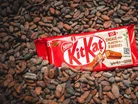
The disappearance of 12 tonnes of KitKat chocolate bars in Europe after thieves made off with the truck transporting them made headlines around the world.
KitKat, which is made by Nestlé, said the truck carrying 413,793 bars of its new range set off from central Italy to distribute the chocolate throughout Europe.
It never arrived at its scheduled final destination in Poland. Nestlé did not reveal where exactly the truck was lost.
The stolen bars were from KitKat’s new Formula One line, released after KitKat became the official F1 chocolate bar last year. The bars were moulded in the shape of race cars.

What Does Apple's American Expansion Mean for Supply Chains?
Apple is expanding its American manufacturing capabilities, bringing production to the US.
As global demand has shifted alongside regulatory changes and policy implementation, Apple is one of the many companies looking to develop a strong US foothold.
Throughout 2025, the technology company began heavily investing in its US manufacturing capabilities, having now announced further advancements in its American Manufacturing Program.
Last year, Apple pledged to move its iPhone manufacturing to the US following threats from US President Donald Trump of higher tariffs on Apple products. Since its initial pledge, it announced the acceleration of US investment and the introduction of the American Manufacturing Program (AMP).
Is Elon Musk Reshaping Semiconductor Supply Chains?
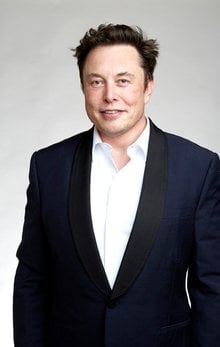
Elon Musk has announced plans to build two AI chip factories in Austin, Texas, a move that could signal a significant shift in how major technology companies approach semiconductor supply chain management.
The decision comes as global demand for advanced chips continues to outpace manufacturing capacity, creating pressure points across existing supply networks.
Elon, CEO of Tesla, xAI and SpaceX, revealed the plans under his venture Terafab, announced in March 2026 as a collaboration between his three companies – all of which require advanced AI chips for their operations.
The announcement highlights growing concerns about supply chain dependencies and the challenges of securing reliable chip supplies in an increasingly complex geopolitical environment.
In a post on X, Elon says: "Terafab will technically be two fabs, each making only one chip design. This greatly simplifies process flow and allows more linear, adjacent movement of the FOUP."

How Tracking Financial Risk can Avoid Supplier Disruptions
As commercial bankruptcies continue to rise, tracking supplier financial risk should be a strategic priority. When suppliers become financially distressed or fail, they can quickly trigger disruptions across the supply chain.
Because organisations often rely on hundreds to tens of thousands of suppliers, mitigating this risk requires clear supplier classification, actionable financial risk insights and collaboration across departments.
Supplier financial risk refers to how a supplier’s deteriorating financial health disrupts its ability to deliver goods or services. This risk manifests in late shipments, quality issues, reduced capacity or complete loss of supply.
Strait of Hormuz: 6 Experts Have Say on Supply Chain Crisis
The situation in the Middle East is evolving rapidly, with tensions around the Strait of Hormuz creating new risks for global trade.
For supply chains, this uncertainty is unlike anything seen in recent years, as key maritime corridors face potential disruption. Shipping companies, energy producers and manufacturers are all reassessing routes and contingency plans in real time.
The ripple effects extend beyond oil and gas, touching fertiliser, food production and industrial supply chains worldwide.
To make sense of the challenges ahead, Supply Chain Digital spoke to six experts offering insight into what comes next.