
How BBVA’s $1.5B Deal is Driving Aviation’s Sustainable Fuel

Aviation faces distinct decarbonisation challenges compared to other transport sectors. Heavy battery systems make electrified long-haul flights uneconomical at present.
The industry has turned its attention to clean-burning fuels as an alternative pathway. Sustainable Aviation Fuels represent one option under development.
Funding constraints and policy adoption timelines have slowed progress in this area. Financial institutions are beginning to structure capital for large-scale renewable fuel infrastructure.
Brazilian facility receives capital
BBVA has arranged a US$1.5bn financing package for Acelen Renováveis, a Brazilian renewable fuels developer. The company operates as part of the Mubadala Capital group.
The capital will fund a renewable fuels plant in Brazil. The facility will produce Sustainable Aviation Fuel and Hydrotreated Vegetable Oil.
"Beyond its scale, the project reinforces SAF as a key lever for the decarbonisation of air transport and helps position Brazil as a market with significant potential in sustainable fuels," says Carlos López Rabadán, Managing Director at BBVA responsible for Project Finance in South America.
"Our participation underscores the bank's ability to structure highly complex financial solutions and to support our clients in projects with long-term impact."
The transaction involved coordination between commercial banks and development finance institutions. HSBC and the International Finance Corporation participated in the joint financing structure.

Blended finance for infrastructure
BBVA combined financial instruments to manage risks associated with large-scale infrastructure projects. The approach reflects patterns emerging in sustainable finance for capital-intensive technologies.
Co-investment mobilisation between multilateral institutions and commercial lenders could show one method for scaling renewable fuel production. The IFC, a World Bank Group institution, contributed to the financing arrangement.
"By supporting one of the first SAF facilities in Latin America at this scale, we seek to demonstrate commercial viability, reduce risks and lay the groundwork for replicable investments in the region," says Olaf Schmidt, Regional Director for Manufacturing, Agribusiness and Services for Latin America and Europe at IFC.
"The Acelen Renováveis project is an example of how industrial innovation and sustainable development—including, significantly, in the agribusiness sector—can mutually reinforce each other, generating quality jobs, strengthening agricultural value chains and accelerating Brazil's transition to a more resilient economy."
The financing structure involved international commercial banks alongside development finance institutions. This configuration could indicate how subsequent renewable fuel projects might secure capital.
Plant capacity and employment
Acelen Renováveis will construct a plant with an estimated daily capacity of 20,000 barrels of SAF and HVO. The biorefinery will occupy an existing industrial site in Bahia, northeast Brazil.
The facility could create up to 3,600 direct and indirect jobs according to the company. Construction will commence following the completion of financing arrangements.
Acelen Renováveis plans to cultivate 1,440 square kilometres of degraded land. The company will allocate 20% to partnerships with family farms and small producers.
"This model seeks to combine productive regeneration, social inclusion and decarbonisation, aligned with global best practices in sustainability and low-carbon development," the company says. The approach combines industrial development with agricultural partnerships.
Market positioning and output
"The structuring of this financing confirms the technical, financial, and socio-environmental robustness of the project. We are now entering a new phase of large-scale industrial execution," says Luiz de Mendonça, Chief Executive Officer of Acelen Renováveis. "BBVA has been a key strategic partner in structuring and enabling this financing, demonstrating deep commitment to the project and to the advancement of sustainable finance. Together, we are advancing one of the most relevant initiatives for the future of aviation and contributing meaningfully to the acceleration of the global energy transition."
The plant's output will primarily serve European and United States markets. Regulatory frameworks and corporate demand for SAF are expanding in both regions.
Brazil could emerge as a production hub for sustainable fuels. This transaction integrates the country into global green supply chains.
"This operation reinforces our commitment to supporting clients and partners in the energy transition, connecting global financing to transformational projects with long-term economic, social and environmental impact," says Alexandre Guião, Chief Executive Officer of HSBC Brazil. The bank participated in the joint financing structure alongside BBVA and IFC.
Banks target technology finance
The deal marks BBVA's first global transaction in the SAF segment. Financial institutions face pressure to align portfolios with net-zero targets.
Banks are moving from general green bonds to technology-driven project finance. This could mean more targeted capital allocation for specific decarbonisation technologies.
"This transaction represents a significant step for BBVA in advancing its commitment to the energy transition within an emerging market such as SAF," adds Carlos. The bank structured the financing package for the Brazilian facility.



Executives

Alexandre Guião
CEO, Brazil

Carlos López Rabadán
MD, Head Project Finance South America
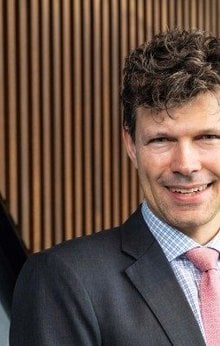
Olaf Schmidt
Regional Director for Manufacturing, Agribusiness and Services for Latin America and Europe