How are Maersk and Altana Growing a Digital Trade Network?
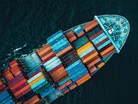
In an era of constantly shifting compliance regulations and trade relations, Maersk and Altana have announced a partnership to accelerate global commerce.
The companies are developing a digital trade network – the first within a major global logistics infrastructure.
This will create a more streamlined and compliance-accurate supply chain.

A new partnership
Altana is an AI-powered network, developed to ensure reliable trade within a new era of supply chains. It unites businesses and governments across a trusted and AI-powered platform in order to ensure safety and resilience across operations. Governments utilise the platform to enforce tariffs, manage cross-border trade and effectively manage relationships between buyers and suppliers.
It is now partnering with Maersk, an integrated logistics company offering supply chain solutions for a range of businesses. It oversees port operation, warehousing and air freight, as well as supply chain management. The partnership involves the building of a digital trade network, brining in AI-powered trade compliance, enforcement and facilitation to Maersk's Gemini Cooperation.
The Gemini Cooperation is a collaboration between Maersk and Hapag-Lloyd, launched in February 2025, developed to ensure more timely deliveries and to meet changing demands of trade. It created a new standard for physical trade, resulting in a schedule performance in excess of 90% across 29 mainliner and 29 shuttle services across East-West trade routes.
This partnership between Maersk and Altana builds off that, aiming to increase and accelerate trusted global commerce. It is transforming the Gemini Cooperation into a digital trade network, introducing pre-cleared, product-level identity markers – also known as Product Passports. These will be understood by customs authorities across the 12 key international ports who make up 70% of global trade.
"A global Product Passport for Goods is the innovation needed to elevate international trade towards an ecosystem of trust — connecting and transforming major trade routes into digital trade corridors," explains Lars Karlsson, Global Head of Trade and Customs Consulting at Maersk.
"This is a game-changer for international trade in a time of uncertainty. Together, Maersk and Altana will promote this instrument as a new paradigm for trusted trade."
Meeting regulatory pressure
Global trade is constantly shifting, as geopolitical events cause disruption and increasing trade tensions result in new relationships. As a result, shifting regulations and alliances are transforming trade, resulting in greater demand for visibility and traceability.
Altana has already worked with global customs agencies to implement trade enforcement, having created a public-private model for end-to-end product traceability. It has also worked to ensure goods can be verified and trade remains compliant at all times.
Altana's new passport manager will power the partnership. This has recently launched in order to directly connect logistics providers and importers to customs authorities. This allows for greater communication and transparency across trade.
The passport manager also means that governments can receive and act on the Product Passports, which enables the transformation of customs entries into record-keeping events. Through this, there will be greater oversight and less risk or delays across the process.
"The global trade system was built to manage shipments at a border — but today's regulations are network-shaped and demand product-level verification across entire value chains,” adds Evan Smith, CEO and Co-Founder of Altana.
“With Maersk, we're building an agentic digital layer on top of the world's most reliable physical logistics network to meet that moment. Product Passports are Global Entry for Goods: pre-validated compliance that lets trusted trade flow while giving every nation the enforcement tools they need, on their own terms.”
Benefits of the collaboration
Through utilising the Altana passport manager, customs authorities can maintain stronger communication and accuracy across their operations.
The customers across the trade lanes involved in the Gemini Cooperation will gain:
- AI-powered clearance platform - using Altana's agentic recommendations, customs authorities can make risk and compliance decisions, following better communication with importers and a thorough understanding of the value chain. This means that shipments can move faster and resources can be spent elsewhere – such as on high-risk trade.
- Federated data model - the passport manager utilises a federated data model as its framework, meaning that Maersk can share product passports with local customs authorities without a risk of data breach, or customs' data being sent elsewhere.
- Adapts to local regulations - at a customs entry, authorities can add a Product Passport ID field at item level, meaning each shipment's compliance level is accurately shown relative to the local trade regulation. Altana AI suggests risk and compliance determinations, allowing authorities to make well-informed decisions.
This collaboration aims to create a stronger public-private network of trusted trade, meeting global standards through adaptability and greater transparency.


Executives
Evan Smith
CEO and Co-Founder

Lars Karlsson
Global Head of Trade and Customs Consulting Maersk