Why Effective Same-Day Delivery Needs More Than Just Speed
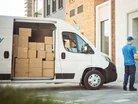
Same-day delivery has long been heralded as the next frontier in retail logistics, but its role is more complex than a simple end state for the industry.
Research from McKinsey suggests consumer expectations have already shifted significantly. Speed is no longer viewed as a premium add-on but part of a new normal influencing purchasing behaviour.
Nearly half of consumers have abandoned online purchases due to slow or unclear delivery timelines, underlining the growing importance of fulfilment in the buying journey. Delivery now serves as a competitive advantage that can determine whether a sale is won or lost.
On the surface, the case for same-day delivery is compelling. Around 64% of consumers are more likely to purchase when the option is available while up to a quarter are willing to pay a premium.
McKinsey also reports potential sales uplifts of as much as 25% alongside improvements in customer loyalty.
For retailers operating in highly-competitive markets, these figures point to a clear opportunity to differentiate and capture incremental demand.
This demand is being fuelled by urbanisation, continued e-commerce growth and rising expectations around convenience.
Consumers are increasingly accustomed to immediacy in other aspects of their lives, from streaming to on-demand services. Same-day delivery extends that expectation into retail, effectively bridging the gap between physical store immediacy and digital flexibility.
For brands, it represents a powerful lever to compete on experience rather than price alone.
However, despite the momentum, same-day delivery remains a relatively small segment of the market. In most countries it accounts for less than 5% of courier, express and parcel volumes, highlighting the gap between consumer interest and operational reality.
The challenge is not demand alone, but the ability to deliver consistently at scale without eroding margins.

Cost remains a significant barrier. Delivering within hours requires dense urban networks, real-time inventory visibility and highly-optimised last-mile operations.
Retailers often need to invest heavily in fulfilment infrastructure, including micro-fulfilment centres and advanced routing technologies.
In many cases they also absorb part of the cost to keep pricing competitive as consumers are often unwilling to pay a substantial premium. Even where willingness exists, it is typically limited to a small proportion of the overall basket value.
Infrastructure plays a defining role, too. Same-day delivery is most viable in large densely populated cities where order volumes can justify the investment required.
Urban areas offer shorter distances and higher drop densities – both of which are critical to making the model economically viable.
Outside these environments scalability becomes increasingly challenging, limiting adoption in suburban and rural markets.
Crucially, speed is not the only factor shaping customer satisfaction. Reliability, flexibility and transparency are often just as important.
Consumers want accurate delivery windows, clear communication and the ability to choose how and when their orders arrive.
- 50% – almost half of consumers have abandoned online purchases due to slow or unclear delivery timelines
- 66% of frequent online shoppers abandon purchases at least monthly due to poor delivery options. (Retail Gazette)
In many cases a guaranteed next-day delivery slot is preferred over a faster but less certain same-day option. This highlights the need for retailers to focus on the overall delivery experience rather than speed alone.
For supply chain leaders this points to a more balanced future. Same-day delivery is unlikely to replace existing fulfilment models but rather complement them within a broader omnichannel strategy.
Next-day, two-day and click-and-collect options will continue to play a critical role, giving customers the flexibility to balance speed, cost and convenience.
The ability to offer a range of fulfilment choices is becoming a key competitive advantage.
Its broader impact therefore may be less about volume and more about influence. The push for faster delivery is driving investment in supply chain transformation, from store networks evolving into micro-fulfilment hubs to the adoption of AI and automation to optimise last-mile performance.
Retailers are rethinking inventory placement, moving stock closer to customers and using data to improve forecasting and responsiveness.
In this context, same-day delivery is already shaping the future, not by dominating it but by accelerating the evolution of more agile and responsive supply chains.
It is raising the bar across the industry and forcing organisations to rethink how they operate.
So, is it the future? Not entirely. Same-day delivery is unlikely to become the universal standard but it will remain a high-value component of an increasingly diversified delivery ecosystem where speed is just one element of a much larger equation.
Amazon
Amazon is perhaps the most recognisable example of same-day delivery at scale.
The company has spent years building a logistics network designed around speed, flexibility and proximity to the customer.
Its investment in fulfilment centres, sortation hubs and last-mile delivery stations has enabled it to offer same-day delivery across major urban areas, particularly through its Prime membership programme.
A key part of Amazon’s strategy is inventory placement. By positioning high-demand products closer to customers, the company reduces delivery times while improving efficiency.
This is supported by advanced data analytics that predict purchasing behaviour and optimise stock levels in real time. The result is a system that can process and deliver orders within hours rather than days.
Amazon has also expanded its same-day capabilities through micro-fulfilment centres and partnerships with independent delivery contractors.
This hybrid model allows it to scale quickly while maintaining control over the customer experience. However, the economics are challenging. Same-day delivery is often bundled into Prime, meaning the cost is absorbed across the wider business.
Despite this, Amazon continues to push the boundaries of speed. Its approach demonstrates how same-day delivery can drive customer loyalty and increase basket size, even if profitability depends on scale and operational excellence.
Walmart
Walmart has taken a different but equally-effective approach to same-day delivery by leveraging its extensive store network.
With thousands of physical locations across the US, the retailer has transformed its stores into fulfilment hubs, enabling it to offer same-day delivery without the need for a fully-centralised logistics infrastructure.
This store-based model allows Walmart to fulfil online orders from local inventory, significantly reducing delivery distances and costs.
Customers can access same-day services through options such as Express Delivery, which promises delivery within a few hours for a fee.
The retailer has also integrated click-and-collect services, giving customers flexibility in how they receive their purchases.
Technology plays a central role in Walmart’s strategy. The company uses real-time inventory systems and route optimisation tools to ensure efficient order fulfilment. It has also partnered with third-party delivery providers to extend its reach and capacity, particularly during peak periods.
Walmart’s approach highlights an important lesson for supply chains. Same-day delivery does not always require building new infrastructure from scratch.
By repurposing existing assets, retailers can create a cost-effective model that meets customer expectations while maintaining operational control. This strategy has helped Walmart remain competitive in an increasingly speed-driven market.
Zalando
European fashion platform Zalando offers a strong example of how same-day delivery can be applied in a more targeted way.
Rather than rolling it out universally, Zalando has focused on key metropolitan areas where demand is highest and logistics are most efficient.
The company has introduced same-day delivery in cities such as Berlin, using a combination of local warehouses and partner networks to fulfil orders quickly. This selective approach allows Zalando to manage costs while still offering a premium service to customers who value speed.
Zalando’s model is built around flexibility. Customers can choose from a range of delivery options depending on their needs, including next-day and scheduled delivery.
Same-day is positioned as an added convenience rather than the default, aligning with the idea that not all purchases require immediate fulfilment.
Sustainability is also a consideration. By concentrating same-day delivery in dense urban areas, Zalando can optimise delivery routes and reduce environmental impact.
This reflects a broader industry trend where speed must be balanced with efficiency and sustainability goals.
Zalando’s strategy shows that same-day delivery does not have to be universal to be effective. By focusing on the right markets and offering it as part of a broader delivery mix, the company is able to enhance customer experience without overextending its logistics network.